
Best Glass Types for Balustrades: Toughened, Laminated or Both?
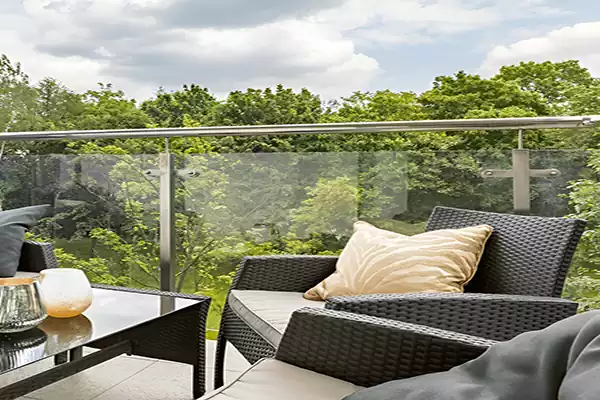
Glass Balustrades: Safety and Style
Glass balustrades have become a signature flourish in modern architecture, framing mezzanines, staircases, balconies and roof terraces while preserving views and daylight. Their appeal rests on two pillars:
- Aesthetic minimalism – slim sight‑lines, light reflection and an “invisible” barrier.
Achieving both safety and aesthetics means selecting the best Glass Types for Balustrades that deliver performance and visual appeal.The industry’s workhorses are toughened glass and laminated glass often combined in a hybrid make‑up. Understanding how the best Glass Types for Balustrades behave under load, impact, and breakage is essential for contractors, architects, and property owners who must balance style, safety and budget.
Best Material for Skylights: Make the Right Choice
Not sure whether to go with glass, acrylic, or polycarbonate? Get expert insights on the best material for skylights to balance daylight, safety, and thermal performance.
Comparing the Best Glass Types for Balustrades: Toughened vs Laminated
What Is Toughened (Tempered) Glass?
Toughened glass is heat‑treated to introduce compressive stresses on its surfaces. The process makes it four to five times stronger than annealed glass of equivalent thickness. If it fails, it shatters into small granules that reduce laceration risk.
Pros
- High impact resistance – suitable where crowd loads are moderate.
- Lighter per square metre than an equivalent‑strength laminate, easing installation.
Cons
- No post‑breakage integrity – once fractured, the pane collapses, leaving an unprotected edge.
- Can suffer spontaneous breakage from nickel‑sulfide inclusions (rare but possible).
What Is Laminated Glass?
Laminated glass sandwiches two or more sheets around a polyvinyl butyral (PVB) or ionoplast interlayer. When punctured, shards adhere to the film, maintaining a barrier.
Pros
- Retains load‑bearing capacity after breakage – a critical safety glass option for fall protection.
- Allows acoustic, solar or coloured interlayers for bespoke performance.
Cons
- Edge clouding can occur over time if water infiltrates the interlayer on poorly detailed outdoor edges.
Mechanical Snapshot
When to Use Each Type
Toughened‑Only Panels
- Budget internal stairs with continuous handrail – A steel or timber capping provides redundancy if glass shatters.
- Framed post‑and‑rail systems – Metal posts transfer line loads, so glazing acts mainly as infill.
- Temporary works – Exhibition stands or short‑life retail displays where replacement cost matters more than longevity.
Laminated (Toughened‑Toughened) Panels
- Frameless edges without handrail – Minimalist external balconies where any fall risk is unacceptable if glass breaks.
- High‑rise façades – Balconies exposed to wind suction and crowd load; laminated glass maintains guard even after impact.
Influence of Location
Using Both: Hybrid Solutions
In premium installations, designers specify toughened‑laminated glass: two panes of fully toughened glass laminated together. The hybrid gives:
- Strength of toughened plies.
- Post‑breakage safety of the laminate.
Emerging variants:
- Triple‑laminated (3 × 8 mm toughened) for very high line loads (1.5 kN/m) such as stadia parapets.
- Heat‑strengthened + toughened to improve fire performance where Regulation 7 restricts some interlayers.
Design tip: Always dimension thickness from structural calculations—not rule‑of‑thumb. A 1 100 mm‑high balcony in residential use (category B) must resist 0.74 kN/m line load and 0.5 kN/m² infill load under BS 6180; glass sizing depends on span, fixing edge conditions and deflection limits.
Are Skylights Worth It in the UK?
From winter heat loss to summer gains, the UK climate demands thoughtful skylight design. Read our full analysis on whether skylights are truly worth it in the UK.
Real‑World Cost Optimisation
- Post‑and‑rail retrofit: Switch from laminated to 15 mm toughened if the stainless posts can take the full line load saves money but sacrifices post‑breakage integrity.
- Whole‑life value: Laminated panels survive vandalism or accidental impact better; replacing one broken laminate is cheaper than legal exposure from an unprotected edge.
Design Without Limits: Best Custom Skylights
Want a skylight that fits your vision and your structure? Learn how bespoke glazing can elevate your project in our guide to the best custom skylights.
Conclusion and Recommendations
Choosing the best Glass Types for Balustrades before selecting fixings helps avoid costly redesigns and ensures compliance with structural and safety standards.
- For frameless or cap‑less balustrades where minimalism rules, specify toughened‑laminated glass (17.5 mm+). It meets BS 6180 without a handrail and keeps occupants safe if one lite shatters.
- For interior stairs with a stout handrail and a tighter budget, monolithic toughened glass remains an acceptable choice provided the rail ties panels together and fulfils the load path.
- Hybrid approaches (toughened‑laminated, triple laminate, or heat‑strengthened combos) solve specific challenges: high crowd loads, fire‑class hurdles or acoustic comfort.
- Always involve a structural engineer for span calculations and a façade‑fire consultant if Regulation 7 applies.
When safety, clarity and clean lines must coexist, laminated systems edge ahead despite the price premium. They deliver the belt‑and‑braces reassurance contractors, architects and property owners need while keeping that sought‑after glass‑only aesthetic.