
Indoor vs. Outdoor Glass Balustrades: Design Tips & Standards
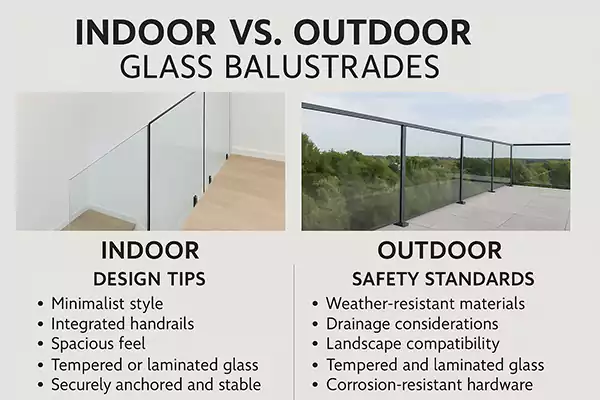
Indoor vs. Outdoor Glass Balustrades
Few architectural elements combine transparency, safety and contemporary style as elegantly as a glass balustrade. Whether lining a staircase, edging a mezzanine or securing a rooftop terrace, these clear barriers invite light, preserve sight-lines and underline modern minimalism.
Overview of Glass Balustrades in Different Settings
A glass balustrade (or glass railing) is a safety barrier formed predominantly of glass panels with or without a supporting frame. Its primary purpose is to prevent falls from raised edges while maintaining openness and light flow.
Typical Indoor Applications
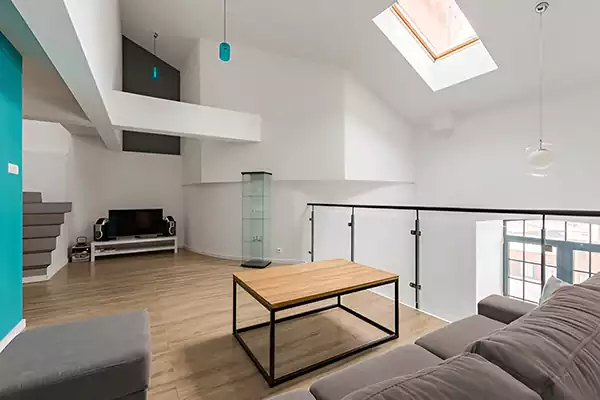
Staircases & half-landings – maintain light penetration between floors.
Mezzanine edges – eliminate visual bulk in double-height spaces.
Lift lobbies & atriums – showcase internal vistas, often with stainless steel or timber handrails.
Typical Outdoor Applications
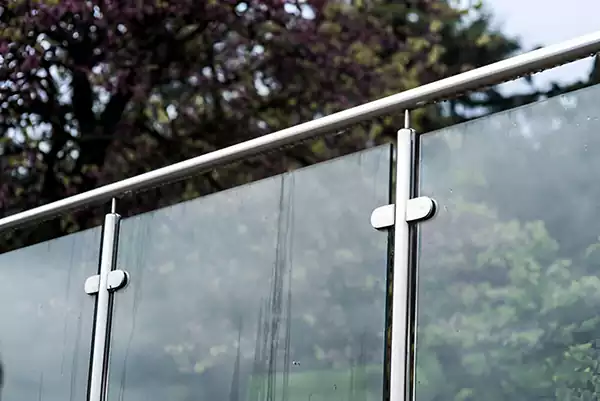
Balconies & terraces – maximise views while blocking wind.
Roof gardens & pool decks – meet splash safety codes and minimise barrier interruptions.
External staircases & bridges – combine durability with urban aesthetics.
Both settings increasingly favour frameless balustrade systems, where laminated safety glass slots into a slim aluminium or stainless-steel channel, erasing vertical posts for an uninterrupted look.
Which Glass Is Right for Your Balustrade?
Not all glass is created equal when safety and clarity matter. Learn the differences between toughened and laminated options in our in-depth guide to the best glass types for balustrades.
- Design Variations: Indoor vs Outdoor
Design Driver Indoor Glass Balustrades Outdoor Glass Balustrade Design
Visual goals Light bounce, reflection, slim sight-lines Unobstructed landscape views, wind protection, visual link to garden
Handrail choices Timber, powder-coated steel, or cap-less (structural glass acts as rail) Stainless steel or cap-less; timber less common outdoors due to weathering
Wind loading Negligible Must resist lateral wind pressure; thicker laminates required
Privacy needs Often clear or low-iron; frosted for WC lobbies Tinted, frosted or fritted patterns to screen neighbours without sacrificing light
Sound attenuation Usually not critical Laminated acoustic interlayers can cut traffic noise on balconies
- Design tip: Indoors, the balustrade can become a sculptural element consider low-iron glass and warm oak handrails for a gallery vibe. Outdoors, treat the balustrade as part of the façade: coordinate glass tint and metal finishes with cladding colours for a cohesive envelope.
Material and Fixing Differences
Glass Specification
Setting Typical Build-Up Notes
Outdoor 10 mm toughened + 10 mm toughened with SentryGlas® or stiff PVB Handles higher live loads and wind suction; UV-stable interlayer resists yellowing
Framing & Channel Systems
- Indoor: base-fixed channels recessed into the floor finish create a flush threshold. Post-and-rail systems still appear in budget builds but are losing ground to frameless details.
- Outdoor: surface-mounted or side-mounted channels keep the structural anchor above waterproofing layers. Drainage slots prevent water pooling inside profiles.
Fixings & Fasteners
- Gaskets & wedges: EPDM or PVC compression wedges lock glass in channels, allowing dry replacement without dismantling the floor finish.
Planning a Skylight? Choose the Right Material
Whether glass or polycarbonate, your choice affects light, insulation, and lifespan. Explore our breakdown of the best materials for skylights based on performance and aesthetics.
Glass type
Edge protection
Wind loading (outdoor)
Are Skylights Worth It in the UK Climate?
Rain, insulation, and natural light — find out how skylights perform in British weather and if they justify the investment in our article: Are skylights worth it in the UK?
Maintenance Tips by Location
Indoor Maintenance
Outdoor Maintenance
- Winter care: de-ice with non-corrosive agents; avoid rock salt that pits metal finishes.
Why Go Custom with Skylights?
Standard rooflights don’t always fit your architecture or goals. See how bespoke design enhances comfort and resale value in our guide to the best custom skylights.
- Pros and Cons: Indoor vs Outdoor Systems
Every location demands a different balance between appearance, strength, and maintenance. Below are the key advantages and drawbacks of each type of glass balustrade to help you decide which fits your project best.
Indoor Glass Balustrades – Pros
Allow maximum light flow and visual connection between floors.
Create a minimalist, luxury look ideal for staircases and mezzanines.
Require minimal maintenance — no exposure to rain or UV.
Easy to integrate with timber, steel, or frameless designs.
Indoor Glass Balustrades – Cons
Offer lower structural load resistance compared to exterior systems.
Provide limited sound insulation.
Fingerprints and smudges show easily, requiring regular cleaning.
Less suited for areas with high impact or public access.
Outdoor Glass Balustrades – Pros
Designed to resist wind, moisture, and temperature changes.
Frameless options give uninterrupted views from balconies or terraces.
Enhance safety while preserving openness and daylight.
Use laminated glass that holds together even if one pane breaks.
Outdoor Glass Balustrades – Cons
Higher initial cost due to thicker glass and marine-grade fittings.
Require more maintenance to remove salt, dust, or rain stains.
Heavier and more complex installation — needs expert fitting.
UV and weather exposure can degrade lower-quality materials over time.
Design Tip
Indoors, glass balustrades act as sculptural design features. Outdoors, they become part of the building’s protective envelope. Balancing both aesthetics and performance ensures lasting clarity, safety, and architectural harmony.
Which One Should You Choose?
Choosing between indoor and outdoor glass balustrades isn’t just a question of style, it’s about how the space functions, what conditions it faces, and the kind of experience you want to create. Both options share the same design DNA of transparency and elegance, but their performance priorities differ in ways that directly affect cost, maintenance, and safety.
If your project is indoors (a staircase, mezzanine, or atrium) focus on visual flow and architectural refinement. Here, glass balustrades can become sculptural elements, connecting levels without blocking light or sightlines.
Frameless systems with low-iron or clear toughened glass are ideal for this setting, giving a floating, gallery-like effect that enhances interior brightness.
For outdoor applications durability and safety take priority. Choose marine-grade stainless steel (A4/316) fittings, especially near the coast or pool areas, to prevent corrosion.
While the upfront investment is higher, outdoor frameless balustrades deliver unmatched visual rewards: panoramic views, a cleaner façade, and an architectural finish that feels both modern and permanent.
If budget is a concern, framed or semi-frameless systems can offer a compromise, they reduce hardware costs while retaining much of the transparency of frameless designs. But if your goal is a truly seamless aesthetic and long-term performance, full frameless systems are worth every penny.
When making your final decision, think long-term:
- Usage: Will it face heavy traffic, weather, or moisture?
- Maintenance: Can you access the glass easily for cleaning?
- Aesthetic intent: Do you want the balustrade to disappear or become a feature?
Ultimately, the best choice is the one that aligns with both your design ambitions and the technical realities of your space. If you’re unsure which specification suits your project, consulting a specialist like SM Glasstech can help.
Conclusion
A glass balustrade should be invisible to the eye yet rock-solid under load. Achieving that balance means tailoring the system to its environment:
Whichever setting you’re designing, remember the golden trio of glass railing safety: correct lamination, compliant height, and engineer-verified fixings.