
Flat vs Pitched Rooflights: Which One Is Right for Your Home?
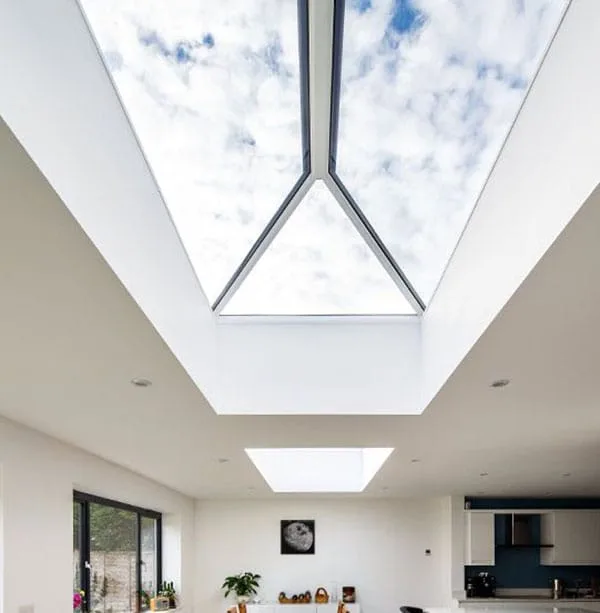
Flat vs Pitched Rooflights
Yet rooflights themselves come in two main styles flat and pitched and choosing the wrong one can mean glare, heat‑loss, or expensive retrofits. This article narrows the lens squarely on rooflights, comparing flat versus pitched units across design impact, thermal performance, installation practicality, and budget. By the finish you’ll know which rooflight type will maximise daylight, comfort and value in your project.
Planning Balconies or Staircases Too?
Choosing the right glass for balustrades is as critical as your rooflight spec. Explore safety-rated, frameless options in our breakdown of the best glass types for balustrades.
Understanding Flat and Pitched Rooflights
Flat Rooflights
- Seamless aesthetic: flush‑glazed edges produce a pure slice of sky.
- Flexible formats: rectangles, circles, pyramid lanterns, even walk‑on glazing.
- Perfect partner for modern single‑storey extensions, garden studios and green roofs.
Pitched Rooflights
- High incident‑angle daylight great on steep loft slopes.
- Built‑in water run‑off no external kerb, so installation is fast and tidy.
- Popular in loft conversions, vaulted ceilings, and heritage rooflines where protruding lanterns aren’t allowed.
Why this distinction matters
Flat units dominate the flat‑roof renovation boom (rear kitchen extensions, garage conversions), while pitched variants excel under rafters. Understanding both ensures you specify rooflights— not dormers, not strip clerestories that truly unlock the light potential of each roof plane.
Comparison by Function and Appearance
| Feature | Flat Rooflight | Pitched Rooflight |
|---|---|---|
| Daylight quality | Wide, even shaft of diffuse light ideal over islands & dining tables | Directional beam follows sun path great for reading nooks, stairwells |
| Sky view | Pure sky panorama; brilliant for stargazing | Sky + horizon view when seated; stronger outdoor connection |
| Design language | Ultra‑modern: frameless “glass hole” | Suits both heritage & contemporary with frame options |
| Ventilation | Usually fixed; vented units need motors | Manual or motorised opening standard; easy purge ventilation |
Take‑away: A flat rooflight excels where visual minimalism and ceiling‑wide daylight are top priorities; a pitched unit shines (literally) in any sloping‑roof zone where cross‑breeze, heritage detailing or seated sight‑lines matter most.
Which Skylight Material Performs Best?
Not all glazing delivers equal thermal, acoustic, or aesthetic results. Learn how to compare polycarbonate, toughened, and laminated glass in our guide to the best material for skylights.
Best Use Cases for Each Type
Flat Rooflights
| Project scenario | Why flat wins |
|---|---|
| Handleless‑kitchen extension | Frameless rooflights echo minimal door tracks; even daylight over island. |
| Green‑roof garden room | Flush glass avoids soil build‑up; kerb height suits sedum depth. |
| Walk‑on terrace over living room | Structural glass doubles as outdoor decking while lighting space below. |
| Cinema loft needing blackout | Flat fixed units accept zip‑blind cassettes fitted flush to kerb. |
Need a Skylight Tailored to Your Roof?
From odd pitches to architectural statements, custom skylights solve what off-the-shelf can’t. See what’s possible in our expert feature on the best custom skylights.
Pitched Rooflights
| Project scenario | Why pitched wins |
|---|---|
| Artist’s studio in barn | North‑facing pitched units deliver cool, diffuse light zero glare on canvases. |
| Attic shower room | Rapid steam purge via top‑hung rooflight; no footprint loss. |
Practical Rooflight‑Selection Checklist
- Roof angle & structure
- Flat or < 5° pitch → flat rooflight.
- 15 – 60° slope → pitched unit (simpler detailing).
- Daylight goal
- Uniform ambient light → flat.
- Dramatic shafts / mixed views → pitched.
- Ventilation requirement
- MVHR‑equipped, airtight build → fixed flat units fine.
- Natural purge or bathroom → opening pitched unit.
- Design intent
- Minimalist, frameless aesthetic → flat.
- Traditional material palette → pitched (or conservation).
- Budget & programme
- Value‑engineer multiple openings → pitched is cost‑efficient.
- One iconic glazing statement → invest in large flat pane.
Glass Balustrades: Inside or Out?
If you’re also updating balconies or stairwells, check out our design tips and safety advice for indoor vs. outdoor glass balustrades.
Conclusion of Flat vs Pitched Rooflights
Rooflights: flat or pitched are not a “nice‑to‑have” extra; they’re the single most potent tool for daylighting, energy saving and architectural impact in today’s homes.
- Flat rooflights give a sleek, borderless sky view and bathe big volumes of space in even, diffuse light ideal for extensions and roof decks.
- Pitched rooflights slot seamlessly into sloping roofs, delivering balanced daylight, built‑in ventilation, rapid installation and heritage‑friendly aesthetics.
Match the rooflight type to roof geometry, daylight ambition and budget, and you’ll unlock rooms that feel bigger, brighter and better connected to the outdoors whatever the property style.
Need expert guidance? Book a free Rooflight Design Call with SM GlassTech. Our specialists size, specify and install both flat and pitched systems, ensuring thermal performance, airtightness and show‑home looks without compromise.
Balustrades in Your Plans Too?
Whether it’s for indoor staircases or outdoor terraces, selecting the right glass makes all the difference in safety and design. Don’t miss our in-depth guide to the Best Glass Types for Balustrades—including toughened, laminated, and hybrid systems.